
helena ronis paid ads courses

Most People Don’t Fail at Ads Because They’re “Bad” at Ads…

They fail because no one taught them the rules.

They boost posts.
They turn on Google Ads with all the bad settings.
They “test” LinkedIn.

And then…

Money disappears.

No tracking.
No structure.
No plan.

It’s not that ads don’t work.
It’s that most people were never shown how they actually work.

So I built workshops to fix that. To teach you the skills you need to succeed in business.
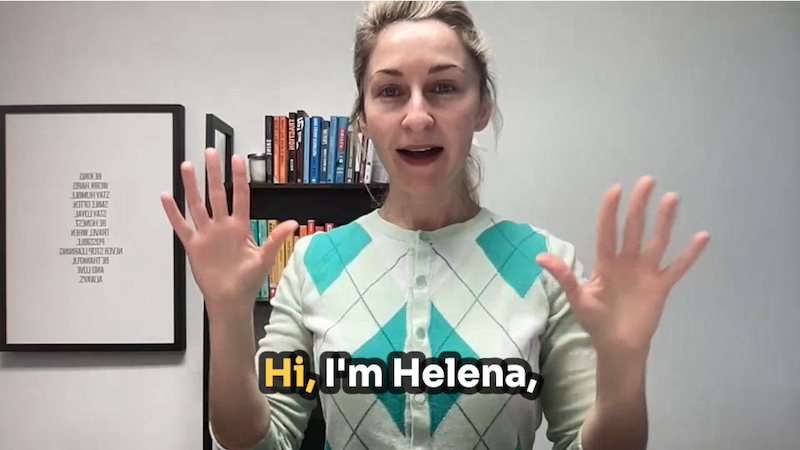
helena ronis paid ads courses

Paid Ads Training

👉 https://course.allfactors.com/paid-ads-training/

This is the foundation.

You’ll learn:

  • How ads really work
  • How to stop wasting money
  • How to turn $1 into $10
  • How to build a simple system you can control

If you want clarity instead of chaos, start here.

Performance Marketing Training

👉 https://course.allfactors.com/performance-marketing-training/

This one is about math.

You’ll learn:

  • What CAC actually means
  • What LTV actually means
  • How to know if ads are working
  • When to scale and when to stop

No guessing. It’s a numbers game.

Paid Search Training

👉 https://course.allfactors.com/paid-search-training/

When someone searches, they want something.

You’ll learn:

  • How to show up at the right time
  • How to pick the right keywords
  • How to block the wrong ones
  • How to write ads people click

Search is powerful. If you do it right.

Google Ads Training

👉 https://course.allfactors.com/google-ads-training/

Google can print money.

Or burn it.

You’ll learn:

  • How to set up campaigns properly
  • How to track conversions
  • How to use bidding without losing control
  • How to scale safely

Simple structure. Big difference.

Bing Ads Training

👉 https://course.allfactors.com/bing-ads-training/

Less competition. Cheaper clicks.

You’ll learn:

  • How Bing works differently
  • How to import campaigns the right way
  • How to grab easy wins most people ignore

Most marketers forget Bing. That’s your edge.

YouTube Ads Training

👉 https://course.allfactors.com/youtube-ads-training/

Video is not just for views.

You’ll learn:

  • How to make ads people don’t skip
  • How to target the right audience
  • How to turn attention into sales

It’s not about going viral. It’s about results.

Paid Social Training

👉 https://course.allfactors.com/paid-social-training/

Social ads are creative + structure.

You’ll learn:

  • How to test ads fast
  • How to know which creative wins
  • How to scale without breaking things
  • How to stop bad ads quickly

No more “let’s see what happens.”

Meta Ads Training

👉 https://course.allfactors.com/meta-ads-training/

Meta is powerful if you understand it.

You’ll learn:

  • CBO vs ABO (without confusion)
  • How to structure audiences
  • How to feed the algorithm properly
  • How to scale winners

Meta rewards smart setups.

LinkedIn Ads Training

👉 https://course.allfactors.com/linkedin-ads-training/

If you sell B2B, this matters.

You’ll learn:

  • How to target real decision makers
  • How to handle high CPCs
  • How to write ads that professionals respond to
  • How to build a strong pipeline

LinkedIn isn’t cheap. But it can be worth it.

Reddit Ads Training

👉 https://course.allfactors.com/reddit-ads-training/

Reddit is different.

You’ll learn:

  • How to speak like a human (not an ad)
  • How to target communities
  • When to use CPC vs CPM
  • What works on Reddit (and what doesn’t)

If you understand the vibe, it works.

TikTok Ads Training

👉 https://course.allfactors.com/tiktok-ads-training/

Attention is short. That’s okay.

You’ll learn:

  • How to create ads that feel native
  • How to test hooks
  • How to scale winning videos
  • How to turn views into conversions

It’s not luck. It’s structure.


Specific for Tech Founders & Marketer 👩‍💻🚀

Startup Marketing Course

👉 https://course.allfactors.com/startup-marketing-course/

Startups don’t have time to waste.

You’ll learn:

  • How to test channels fast
  • When to use paid ads
  • How to find product-market fit signals
  • How to grow without burning cash

This is for builders.

SaaS Marketing Training

👉 https://course.allfactors.com/saas-marketing-training/

SaaS is different.

You’ll learn:

  • How to think about recurring revenue
  • How to model CAC vs LTV
  • How to structure demo or trial funnels
  • How to scale sustainably

SaaS growth is math + patience.

B2B Marketing Workshop

👉 https://course.allfactors.com/b2b-marketing-workshop/

B2B buyers take longer to decide.

You’ll learn:

  • How to handle long sales cycles
  • How to improve lead quality
  • How to align ads with sales
  • How to build trust before the sale

B2B needs strategy.

B2B Digital Marketing Training (B2B ads focused)

👉 https://course.allfactors.com/b2b-digital-marketing-training/

This ties everything together.

You’ll learn:

  • How to build a full B2B funnel
  • How to split budget wisely
  • How to track what actually drives revenue
  • How to scale without overwhelming sales

This is for serious operators.


I didn’t build these to “sell courses.”

I built these to make it affordable for you to gain skills. The skills you need to take your startup to the moon 🚀

Because I’ve watched too many smart founders burn money on ads that were never structured properly.

Paid ads are not gambling.

They’re a skill.

And the skills you gain drive your business.

– Helena

Business Books Every Startup Founders Must Read (or listen to in audible)

Never Split the Difference by Chris Voss

How to Win Friends and Influence by Dale Carnegie

The Sales Acceleration Formula by Mark Roberge

The 22 Immutable Laws of Marketing by Al Ries and Jack Trout

Principles by Ray Dalio

Your Brain at Work by David Rock

The Messy Middle by Sctott Belsky – It will help you see that the ups and downs are similar for all entrepreneurs.

The Upward Spiral by Alex Korb PhD – To help you fix your psyche when you’re down and feel like you can’t get out of it.

Play Bigger by Al Ramadan, Dave Peterson, Christopher – You will learn what it means to build a category defining company and how to do it.

Dear Founder by Maynard Webb – It will help you relate and see that the journey of all founders is similar.

High Growth Handbook by Elad Gill – Every startup needs to grow. This book will serve as a resource to refine your growth playbook.

The Power of Relentless by Wayne Allyn Root – As an entrepreneur you’ll experience many rejections, you have to be relentless and not give up in order to win! That’s also known as Grit, the most important trait of a strong entrepreneur. This book will help inspire your grit 😉

What I learned about SEO

I took a great SEO class at Stanford Continuing Studies. Here are some of the things I learned that put things in prospective.

Search Engine Optimization (SEO) is all about planning, you start by defining how you want people to find you on the web. Brainstorming and defining the keywords you want to be found by is going to be the foundation for all the engine optimization work you’ll do.

Set up Goals – define what you sell, who your customers are, and how best to reach them.

Keywords – with goals in mind, identify the best keywords for your company and measure your rank on Google searches. Remember that you want your website to show up at least on page one (first ten results) and ideally in the first three results of a Google search.

Optimizing:

1. First step is looking at your HTML and strategically placing your keywords in the right page tags so the search engine will recognize it.  Main tags are: <TITLE>, <H1>, <A HREF>, <META DESCRIPTION>, <BODY> or keyword density, <IMG ALT>, <STRONG>, <B>.

Page tags communicate to Google what your page is “about” on a priority basis. Note: If you are using WordPress or another web editor, the editor will produce the HTML for you, but you still want to “View, Source” to check that the HTML produced actually outputs keywords inside critical tags like the <TITLE>, <H1>, <META DESCRIPTION>, etc.

2. On page linking: When you write sentences, make sure keywords you care about in those sentences link back to your page. Where possible, add keyword heavy links on your site navigation to your major landing pages. Keyword heavy <A HREF> tags tell Google which pages are most important on your site, and which keywords matter to you.

3. Off page linking: After you set everything up with your own page, it’s time to ask other websites to link to you to improve the importance of your website, a search engine needs to recognize your website among million others, especially when it’s a common keyword.

Keep in mind about links:

Syntax – the best links have good syntax with your “keyword / keyphrase” nested inside the <A HREF> tag as in <A HREF=“http://www.yoursite.com/”>your target keyword</A>

Authority – the best links come from high PageRank websites inside your community.

Quantity – the best links occur in substantial quantities. More is better.

4. Blog: The search engine likes fresh updated content, by creating new content you expand the number of times you will be found in search queries. Blogging with keywords in mind is a powerful tool to get you to the top of Google. Moreover, your blog can connect to your social media strategy as a “long read” to complement the “short reads” on Twitter, Facebook, or Google+.

Steps to good SEO blogging:

  1. Define your target keyword / keyphrase. Blogging is especially good at long tail keywords and/or trends in your industry. Be a trend watcher.
  2. Write a blog post that is keyword heavy, i.e., contains frequent repetition of the core keywords and help keywords.
  3. Make sure that the blog post itself follows SEO-friendly page tags, i.e., TITLE tag with keywords inside it, good META DESCRIPTION tag, H1/H2 tag, Image ALT, <STRONG>, etc.
  4. Upload the blog post to your website.
  5. Rotate three blog posts on your home page as “freshness signals” to Google, and also to pull Google into your blog.

5. Social media is a plus especially the high traffic websites like Twitter, FB. And in Google’s case, G+ is the social child Google wants to promote ;). You can write your own content linking to your site, or you can do this trategy I learned:

Google and Bing now pay increasing attention to “social mentions,” i.e. the mentions of your website URL in the social chatter. Go to Bing Social (http://www.bing.com/social), input your keywords and identify the top Twitterers and Facebook posters that share content in your keyword communities. Reach out to them to see if they are interested in your blog posts, news releases, new products or services. Make getting social mentions a part of your SEO strategy.

Once you implement your SEO strategies you are pretty much set. Of course fresh blog or social media content is on an on going basis. But as long as you still care about the same keywords and you have an increasing amount of websites link to yours, your SEO will keep improving.